.png)
Smudging with Crystals Botanicals and Herbs for Healing and Intention

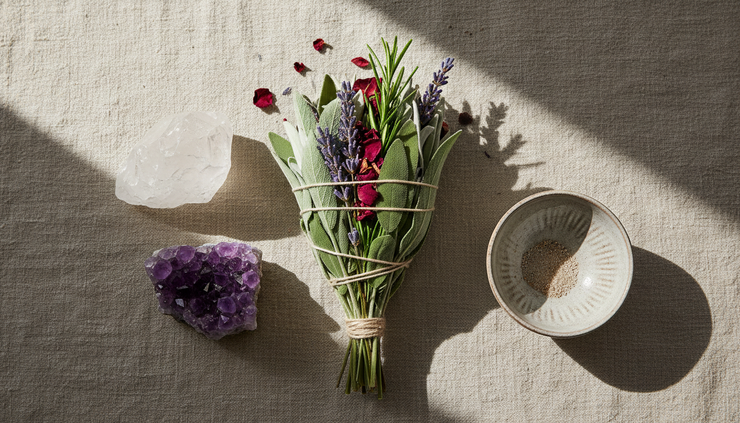
A smudge bundle can look simple: dried leaves tied with thread, a shell or bowl, a feather, a match. Yet the practice carries layers of meaning. Smoke has been used across many cultures to bless spaces, mark transitions, honor the sacred, and help people feel grounded before prayer, meditation, rest, or ritual.
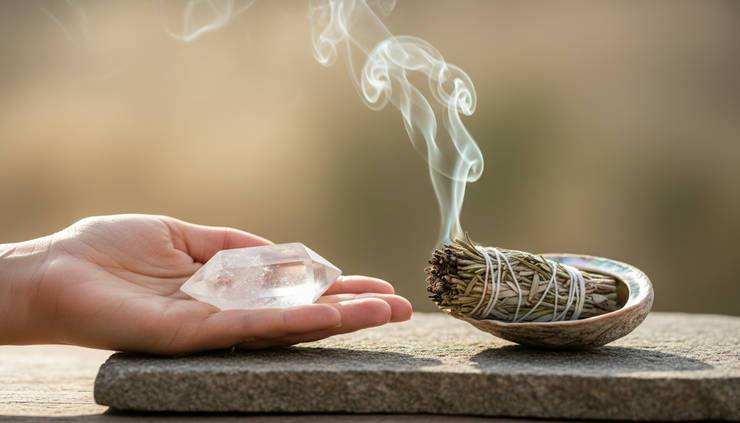
Smudging is often used today as a holistic practice for energetic cleansing and intention setting. In its most familiar form, dried herbs or botanicals are lit, then gently blown out so they smolder. The smoke is moved around the body, an object, or a room while the person focuses on a clear purpose.
Because the word “smudging” is closely tied to Indigenous ceremonial traditions, it deserves respect. Many Indigenous communities have specific teachings, protocols, plants, and prayers that are not interchangeable with general wellness rituals. For a personal home practice, many people use terms such as smoke cleansing or smoke ritual, especially when they are not working within a tradition they were taught directly.
This guide explores how crystals, botanicals, and herbs can shape the experience with care, beauty, and intention.
What smudges are and why people use them
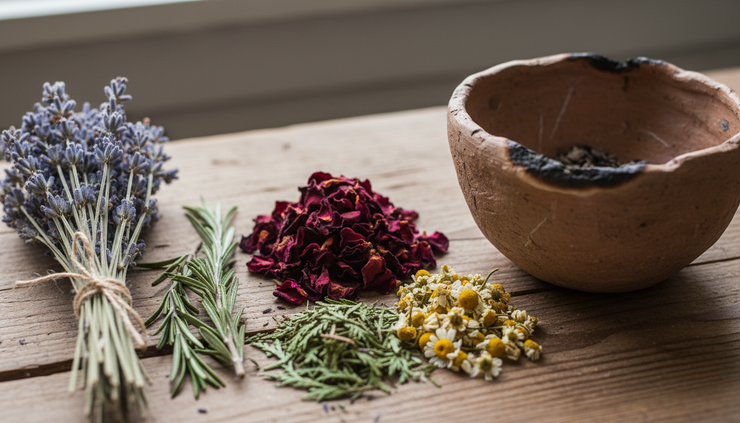
A smudge is a bundle or loose blend of dried plant material used to create fragrant smoke. Common ingredients include sage, cedar, sweetgrass, rosemary, lavender, mugwort, juniper, pine, roses, chamomile, and other botanicals. Some are tied into wands. Others are burned loose on charcoal or placed in a fire-safe bowl.
Traditional uses vary by culture, region, and spiritual lineage. In many practices, smoke is associated with:
Purification
Clearing stagnant energy from a room, ritual object, or personal field.
Protection
Creating a sense of spiritual boundary before ceremony, healing work, or rest.
Blessing
Honoring a new home, a new season, a birth, a creative project, or a meaningful transition.
Prayer and offering
Carrying words, gratitude, or intention in a visible form.
Preparation
Helping the mind shift from everyday tasks into reflection, meditation, or ritual.
The power of the practice does not come from smoke alone. It comes from attention. The scent, flame, herbs, breath, and movement all work together to tell the body and mind, “Pause. Be present. Begin again.”
That is why people often use smudging before journaling, yoga, energy work, moon rituals, altar care, or quiet reflection. It creates a sensory threshold between ordinary time and intentional time.
A safety note belongs here too. Smoke is not suitable for everyone. People with asthma, respiratory conditions, smoke sensitivity, pets, infants, or poor ventilation may need smoke-free alternatives such as sound cleansing, mist sprays, fresh herbs, or simply opening windows with intention. This article is for spiritual and lifestyle use only, not medical care.
How herbs and botanicals shape the ritual
Herbs and botanicals are the heart of most smudge blends. Each plant brings a scent, texture, seasonal feeling, and symbolic meaning. Some plants smell sharp and clearing. Others feel soft, floral, protective, or grounding.
The best blends are not chosen because they look pretty, although beauty helps. They are chosen because their qualities match the purpose of the ritual.
Sage is known for clearing
White sage is widely associated with cleansing, but it is also culturally significant to many Indigenous communities and has been overharvested in some areas. If you choose to use it, buy from ethical growers and learn about its cultural context.
Garden sage is a more accessible option for many home practices. Its scent is earthy and strong. It works well for clearing a room after conflict, before meditation, or when a space feels heavy.
Cedar and juniper support protection
Cedar has a warm, resinous scent and is often linked with protection, blessing, and strength. Juniper has a brighter, forest-like fragrance and is often used for energetic boundaries.
These botanicals fit well in rituals for doorways, new homes, seasonal shifts, or times when a person wants to feel steadier.
Lavender softens the energy
Lavender brings a calm, floral scent. It is often chosen for peace, sleep rituals, grief support, and emotional gentleness. In a blend, it can soften sharper herbs like sage or rosemary.
A lavender smudge feels less like a dramatic clearing and more like an exhale.
Rosemary brings clarity and remembrance
Rosemary has a clean, herbal scent that many people associate with focus, memory, and protection. It is easy to grow in many parts of the United States, dries well, and blends beautifully with citrus peel, lavender, or bay leaf.
Use rosemary when the intention involves study, decision-making, household clearing, or mental reset.
Flowers add emotional tone
Roses, calendula, chamomile, yarrow, and jasmine can change the feel of a smudge bundle. They are often used for love, compassion, rest, boundaries, and joy.
Flowers also make a bundle more personal. A rose from a garden, chamomile gathered from a trusted source, or calendula dried from a summer harvest can carry memory into the ritual.
Why crystals are used with smudging
Crystals do not burn in a smudge bundle. Instead, they are placed nearby, held during the ritual, set on an altar, or used to anchor the intention. Their role is symbolic, tactile, and energetic for those who work with them.
Crystals add three helpful qualities to smudging.
First, they give the intention a physical focus. Holding a stone while speaking an intention can make the ritual feel more grounded. The crystal becomes a reminder of what the practice is for.
Next, crystals add visual and sensory beauty. A smooth piece of rose quartz, a dark grounding stone, or a clear quartz point can change the mood of a ritual space.
Last, crystals can stay with you after the smoke fades. You might carry one in a pocket, place it near your bed, or leave it on an altar as a quiet continuation of the work.
Common crystal pairings include:
Crystal | Common intention | Helpful pairing |
Clear quartz | Clarity, amplification, focus | Rosemary, sage, bay leaf |
Amethyst | Calm, intuition, spiritual reflection | Lavender, mugwort, chamomile |
Rose quartz | Love, softness, emotional healing | Rose petals, lavender, calendula |
Black tourmaline | Protection, grounding, boundaries | Cedar, juniper, rosemary |
Selenite | Lightness, clearing, spiritual clarity | Lavender, sage, sweetgrass |
Citrine | Confidence, creativity, abundance | Orange peel, cinnamon, rosemary |
Smoky quartz | Release, grounding, transition | Cedar, pine, mugwort |
Treat these meanings as guides, not rules. A crystal that carries a personal memory may be more meaningful than a stone chosen from a list. If a piece of smoky quartz reminds you of a mountain trip where you felt strong and clear, that personal connection matters.
Also care for your stones. Some crystals should not be soaked in water. Some fade in sunlight. Some are fragile or powdery. Smoke is usually gentle, but heat is not. Keep crystals away from direct flame and burning herbs.
How crystals, botanicals, and herbs enhance intention
When used together, crystals, botanicals, and herbs create a full sensory ritual. Each element speaks in a different way.
The herbs bring smoke and scent. The botanicals add color, texture, season, and emotional tone. The crystals give weight and focus. The spoken intention directs the practice.
For example, a ritual for peace might include lavender, chamomile, rose quartz, and amethyst. The scent is soft. The colors are gentle. The stones invite calm and compassion. The whole ritual feels quiet before the intention is even spoken.
A ritual for protection feels different. Cedar, rosemary, juniper, black tourmaline, and smoky quartz create an earthy, steady mood. The smoke may feel stronger. The stones feel dense in the hand. The intention might center on boundaries, safety, and stability.
The right combination makes the practice easier to feel. It turns an abstract goal like “I want clarity” into a concrete experience: the clean scent of rosemary, the cool surface of clear quartz, the act of opening a window, and the words, “I welcome clear thought and honest insight.”
That kind of ritual works because it engages attention. It gives the mind something to see, smell, touch, and say.
How to choose combinations for different intentions
Start with the intention, not the ingredient list. A beautiful bundle with too many plants can feel scattered. A simple pairing often works better.
Try this process.
Name the purpose in one sentence.
Use clear language such as “I am clearing old tension from this room” or “I am calling in restful sleep.”
Choose one main herb.
Pick the plant that best matches the purpose. Sage for clearing, lavender for calm, cedar for protection, rosemary for clarity.
Add one supporting botanical.
Use a flower, peel, resin, or leaf that adds emotional tone. Rose for compassion, chamomile for rest, bay for focus, pine for renewal.
Select one crystal as an anchor.
Choose a stone that feels aligned and safe to keep nearby.
Keep the ritual simple.
Light the bundle, let it smolder, move slowly, speak the intention, then extinguish it fully.
Here are some easy combinations to adapt.
Intention | Herbs and botanicals | Crystal anchor | Ritual idea |
Clear a room after stress | Garden sage, rosemary, bay leaf | Clear quartz | Open a window and move clockwise around the room. |
Support restful sleep | Lavender, chamomile, rose petals | Amethyst | Smudge near the doorway, not directly over bedding. |
Create protection | Cedar, juniper, rosemary | Black tourmaline | Place the stone near the entrance after the ritual. |
Invite self-love | Rose petals, lavender, calendula | Rose quartz | Hold the stone at the heart while speaking kindly to yourself. |
Begin creative work | Rosemary, orange peel, cinnamon | Citrine | Smudge the workspace before writing, painting, or planning. |
Release the past | Mugwort, cedar, pine | Smoky quartz | Write what you are releasing, then safely dispose of the paper. |
Welcome a new home | Cedar, lavender, rosemary | Selenite | Walk through each room with gratitude and fresh air. |
Use only plants that are safe and properly identified. Avoid burning unknown plants, treated flowers, dyed botanicals, or anything sprayed with pesticides. Florist flowers often contain chemicals and should not be burned.
If you live with pets, research plant safety before burning herbs. Cats, birds, and small animals can be especially sensitive to smoke and essential oils.
A simple smudging ritual for home practice
A meaningful ritual does not need to be elaborate. What matters is presence, respect, and care.
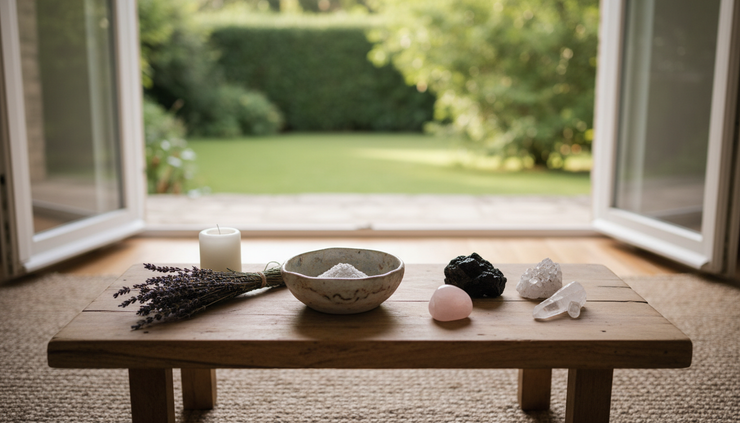
Gather a fire-safe bowl, matches or a lighter, your herb bundle or loose blend, and your chosen crystal. Open a window or door so smoke can move out. This also gives the ritual a symbolic release point.
Before lighting anything, pause. Hold the crystal and name the intention. Keep it short.
Examples include:
“May this space feel calm, clear, and welcoming.”
“I release fear and return to steady ground.”
“May this room support rest and peace.”
“I welcome clarity, courage, and kind action.”
Light the tip of the bundle, then blow out the flame so the herbs smolder. Move slowly. Let the smoke drift around doorways, corners, windows, or around your own body. Use your hand or a feather to guide the smoke if that feels right.
When finished, press the bundle into sand, soil, or a fire-safe bowl until it is completely out. Never leave smoldering herbs unattended.
Then sit for a moment with the crystal. Notice the room. Notice your breath. A ritual does not have to feel dramatic to be effective. Sometimes the shift is subtle: a quieter mind, a cleaner space, a clearer next step.
Choosing with respect and care
Smudging with crystals, botanicals, and herbs for healing and intention works best when it is thoughtful. That means choosing materials with respect for culture, land, safety, and personal meaning.
Buy herbs from trusted growers when possible. Grow your own rosemary, lavender, sage, or calendula if you have the space. Choose ethically sourced crystals from sellers who are open about where their stones come from. Use less rather than more. A small bundle can be just as meaningful as a large one.
Respect closed practices and specific Indigenous ceremonies. Appreciation should not become appropriation. If a tradition is not yours and you have not been invited into it, keep your practice simple, personal, and humble.
A good smoke ritual leaves more than scent in the air. It leaves attention. It asks you to slow down, choose your words, care for your space, and act with intention after the smoke clears.
Start with one herb, one crystal, and one honest sentence. That is enough to begin.
Comments