.png)
Natural Sleep Rituals with Herbs Crystals and Essential Oils for Better Dreams

Sleep rarely improves by force. The more tightly the mind tries to “shut down,” the more alert the body can become. A gentle ritual works differently. It gives the nervous system clear, repeated cues: the day is ending, the room is safe, and rest can begin.
Herbs, crystals, and essential oils can support that shift when used with care. Herbs may soothe the body through warmth, scent, and traditional calming properties. Essential oils can shape the mood of a room in minutes. Crystals, while not a medical sleep aid, can serve as grounding objects for intention, comfort, and quiet focus.
This guide is informational only and is not a substitute for medical advice. If sleeplessness is ongoing, severe, or linked to anxiety, pain, medication, pregnancy, or a health condition, a qualified health professional can help identify the cause.
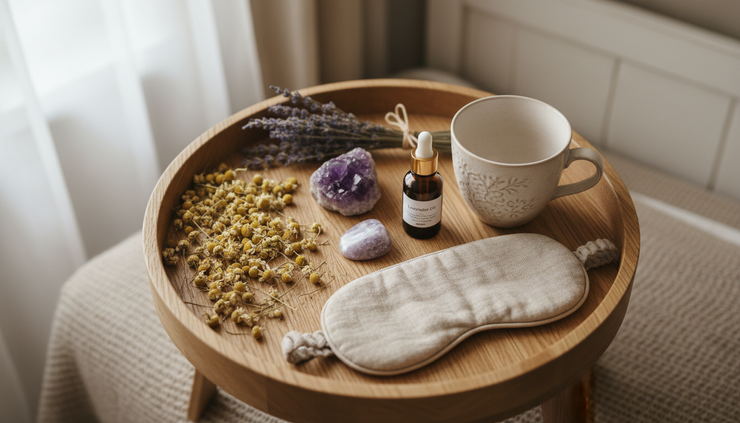
A good sleep ritual starts before the pillow
A restful night often begins an hour before bed. That window is when the body starts to cool, the mind starts to sort through the day, and the senses become more receptive to quiet signals.
A natural bedtime ritual does not need to be elaborate. In fact, the most effective version is usually simple enough to repeat. The goal is to create a sequence your body recognizes.
A steady evening rhythm might include:
Dimming bright lights
Turning off intense shows, news, or work messages
Drinking a calming herbal tea
Diffusing a soft scent for a short time
Holding a crystal during breathwork or reflection
Writing down one dream intention or one worry to release
The power comes from repetition. When the same scent, warmth, texture, and quiet actions appear night after night, they become associated with sleep. Over time, the ritual itself can feel like an exhale.
Keep the mood soft and low pressure. A sleep ritual should never become another task to perform perfectly. If one night is messy, begin again the next day.
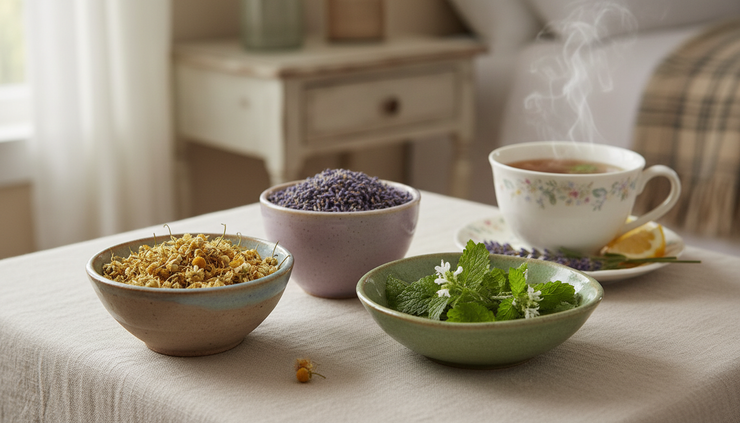
Calming herbs can soften the evening
Herbs have long been used in bedtime traditions, especially as teas, bath infusions, sachets, and tinctures. Their effects vary from person to person, and some herbs can interact with medications or may not be safe during pregnancy. Start gently, use reputable sources, and ask a clinician or trained herbalist when needed.
Chamomile brings warmth and ease
Chamomile is one of the best-known bedtime herbs for good reason. Its soft floral flavor, mild bitterness, and warm aroma make it a comforting choice after dinner. Many people use chamomile tea as a simple nightly cue for relaxation.
Try steeping dried chamomile flowers in hot water for 5 to 10 minutes. Cover the cup while it steeps to hold in the aromatic compounds. Add a little honey if that makes the ritual feel more soothing.
Chamomile belongs to the daisy family, so people with allergies to ragweed or related plants should use caution.
Lavender calms through scent and routine
Lavender is often associated with rest because its aroma feels clean, floral, and quiet. It can be used as a tea ingredient, a pillow sachet, a bath herb, or an essential oil.
For an herbal option, tuck dried lavender buds into a small cotton pouch and place it near the bed, not inside the pillowcase where it may irritate skin or eyes. Refresh the pouch when the scent fades.
Lavender blends well with chamomile, lemon balm, and rose petals for a gentle evening tea.
Lemon balm helps settle a busy mind
Lemon balm has a bright, citrusy scent but a calming character. It is often used when the body feels tired but the mind keeps circling through thoughts. As a tea, it tastes fresh and mild, making it easy to enjoy on its own or mixed with chamomile.
A simple blend might include:
2 parts lemon balm
1 part chamomile
1 small pinch lavender
Steep, sip slowly, and pair it with a quiet activity like reading a few pages or writing in a journal.
Passionflower supports unwinding
Passionflower is often used in herbal traditions for tension and restlessness. Its flavor is earthy and grassy, so it works well in blends rather than as a stand-alone tea.
Because passionflower may interact with sedatives and other medications, it is best to check with a healthcare professional if you take prescriptions or have a health condition.
Valerian is strong and not for everyone
Valerian root has a long history as a sleep herb, but it is more intense than chamomile or lemon balm. Some people find it helpful. Others dislike the smell or feel groggy after using it.
If trying valerian, start with a low amount and avoid mixing it with alcohol, sedatives, or other strong sleep aids unless guided by a professional. It is not the right herb for every body.
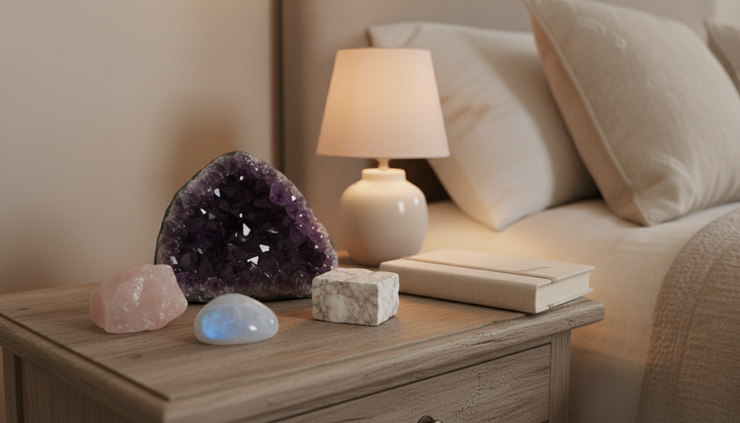
Crystals can anchor intention and quiet focus
Crystals do not replace healthy sleep habits or medical care. Their value in a bedtime ritual is more personal and symbolic. They give the hands something cool and steady to hold. They can mark a moment of transition. They can help turn an abstract wish, such as “I want better sleep,” into a small physical practice.
Think of crystals as anchors for attention. The stone is not doing the work for you. It reminds you to slow your breathing, release the day, and return to the present.
Amethyst is a classic bedside stone
Amethyst is commonly used in relaxation and dream practices. Its purple color and glassy depth naturally feel connected to night, intuition, and quiet reflection.
Place amethyst on a bedside table, or hold it during a few minutes of breathing. With each exhale, imagine the day draining out of the body.
Lepidolite feels steady and soft
Lepidolite often has a muted lilac or gray-purple tone. Many people associate it with calm, emotional balance, and gentleness. It makes a good choice for evenings when the heart feels tender or the mind feels overloaded.
Keep lepidolite near a journal and use it during a short “mental unload.” Write down unfinished tasks, worries, or thoughts. Close the notebook, set the stone on top, and let that action signal enough for tonight.
Moonstone supports dream reflection
Moonstone is often linked with cycles, intuition, and inner awareness. For dream work, it can become part of a simple intention practice.
Before sleep, hold moonstone and choose one clear phrase:
“I welcome dreams that help me understand myself.”
Avoid making demands of your dreams. A light intention works better than pressure.
Howlite and selenite create a clean bedside feeling
Howlite is a white stone with gray veining, often used as a symbol of patience and calm. Selenite has a pale, luminous look and is often used in spiritual spaces for clearing or quieting energy.
Selenite is soft and can be damaged by water, so keep it dry. A small piece on a nightstand can create a sense of simplicity and stillness.
Rose quartz adds comfort
Rose quartz is gentle, familiar, and easy to find. It can support bedtime rituals centered on self-kindness, grief, or emotional repair. Hold it over the heart for a few breaths and speak softly to yourself, even if only in thought.
Try this phrase:
“I did enough today. I can rest now.”
Essential oils shape the atmosphere of sleep
Scent reaches the brain quickly. A familiar aroma can make a bedroom feel calm before the mind has fully caught up. Essential oils are concentrated, so a little is enough.
Use them safely. Do not apply undiluted essential oils directly to skin. Keep oils away from eyes, children, and pets. Some oils are unsafe for cats, dogs, babies, pregnancy, asthma, seizures, or certain medical conditions. When in doubt, skip diffusing or ask a professional.
Lavender is the gentle starting point
Lavender essential oil is the most familiar sleep scent. It works well alone and blends easily with other oils. Add a few drops to a diffuser, or dilute it in a carrier oil for a small amount of hand or foot massage.
A safe adult dilution for general body use is often low, around 1 to 2 percent, which means only a few drops of essential oil in a tablespoon of carrier oil. Sensitive skin needs even less. Patch test first.
Cedarwood adds grounding warmth
Cedarwood has a dry, woody scent that can make a room feel sheltered. It is a good choice for people who find floral scents too sweet. Diffuse it briefly before bed, then turn the diffuser off before sleeping.
Cedarwood pairs well with lavender, frankincense, and sweet orange.
Roman chamomile carries the tea ritual into the air
Roman chamomile essential oil has a soft, apple-like scent. It can feel especially comforting when paired with an actual cup of chamomile tea. The repeated scent note builds a stronger association with bedtime.
Use it sparingly, as the oil can be expensive and potent.
Frankincense supports slow breathing
Frankincense has a resinous, meditative aroma. It fits well with breathwork, prayer, stretching, or quiet reading. Diffuse it while tidying the room or setting out pajamas, then let the scent fade naturally.
A simple diffuser blend for adults:
2 drops lavender
1 drop cedarwood
1 drop frankincense
Run the diffuser for 15 to 30 minutes while awake. More scent is not better. A room that smells faintly calm is more restful than one that feels heavy with fragrance.
Sweet orange can ease the transition
Sweet orange is bright, but in small amounts it can soften tension and add warmth. Use it early in the evening rather than right at lights out if citrus scents feel energizing.
A gentle pre-bed blend:
2 drops lavender
1 drop sweet orange
1 drop Roman chamomile
Avoid applying citrus oils before sun exposure, as some can increase photosensitivity. This matters more for skin use than diffusing, but caution is wise.
Build a bedtime ritual that feels like yours
The best ritual is one you enjoy enough to keep. Start with one herb, one crystal, and one scent. Let the routine stay small for a week before adding more.
Here is a simple 30-minute version.
Set the room
Lower the lights. Put your phone on its charger away from the bed. If using a diffuser, start it now and plan to shut it off before sleep.
Choose a soft blend such as lavender and cedarwood. Open the door slightly if the scent feels strong.
Brew the tea
Make chamomile, lemon balm, or a blend of both. While the tea steeps, avoid multitasking. Let the waiting become part of the ritual.
Hold the warm mug with both hands. Notice the steam, the scent, and the feeling of warmth in your palms.
Choose one crystal
Pick the stone that matches the mood of the night.
If the evening feels like this | Choose this stone |
Mentally crowded | Lepidolite or howlite |
Emotionally tender | Rose quartz |
Restless and scattered | Amethyst |
Dream-focused | Moonstone |
Heavy or overstimulated | Black tourmaline or smoky quartz |
Place the crystal beside the bed, or hold it while breathing slowly.
Write one line
Dream quality often improves when dreams receive attention. Keep a notebook near the bed and write one brief line before sleep.
Try one of these:
“Tonight I welcome restful sleep.”
“I am open to remembering helpful dreams.”
“I release the day and return to my body.”
“If I dream, I will listen gently.”
In the morning, write down anything you remember before checking your phone. Even fragments count. A color, feeling, place, or face can become meaningful over time.
Close the ritual
Turn off the diffuser. Set the tea cup aside. Place the crystal where it will not fall into the bed. Take five slow breaths.
Let the last action be simple. Touch the light switch, lower your head, and allow the ritual to end.
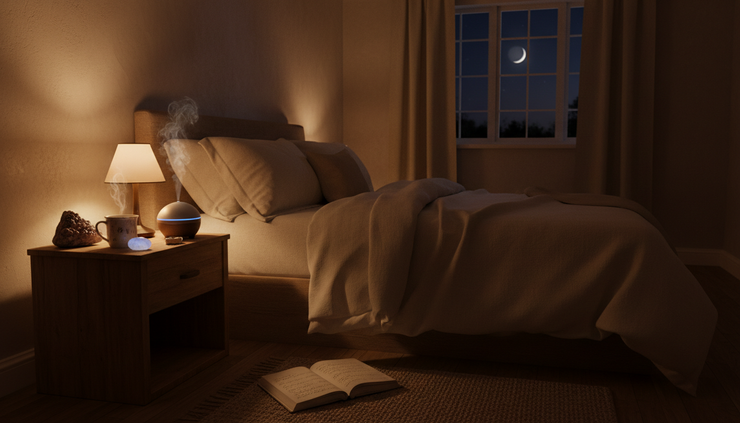
Better dreams grow from gentleness
Natural sleep rituals with herbs crystals and essential oils for better dreams work best when they are steady, safe, and personal. Chamomile tea may warm the body. Lavender may soften the room. Amethyst or moonstone may help focus intention. A journal may invite the dream world to linger a little longer after waking.
The real magic is not in doing every step. It is in creating a peaceful pattern that your body can trust.
Begin tonight with one cup of tea, one calming scent, and one quiet breath. Let that be enough.
Comments